GNSS-independent positioning for ultra-light satellite IoT
TALOS has successfully completed HERMES1, a development project focused on GNSS-independent positioning of extremely small and energy-constrained transmitters using LEO satellites.
As part of the project, the HTWK Leipzig developed a Doppler-based positioning algorithm for TALOS. The approach uses the frequency shift of a radio signal caused by the relative motion between a transmitter on the ground and a satellite in orbit. By evaluating these measurements over a satellite pass, the position of the transmitter can be determined without requiring a GNSS receiver on the device itself.
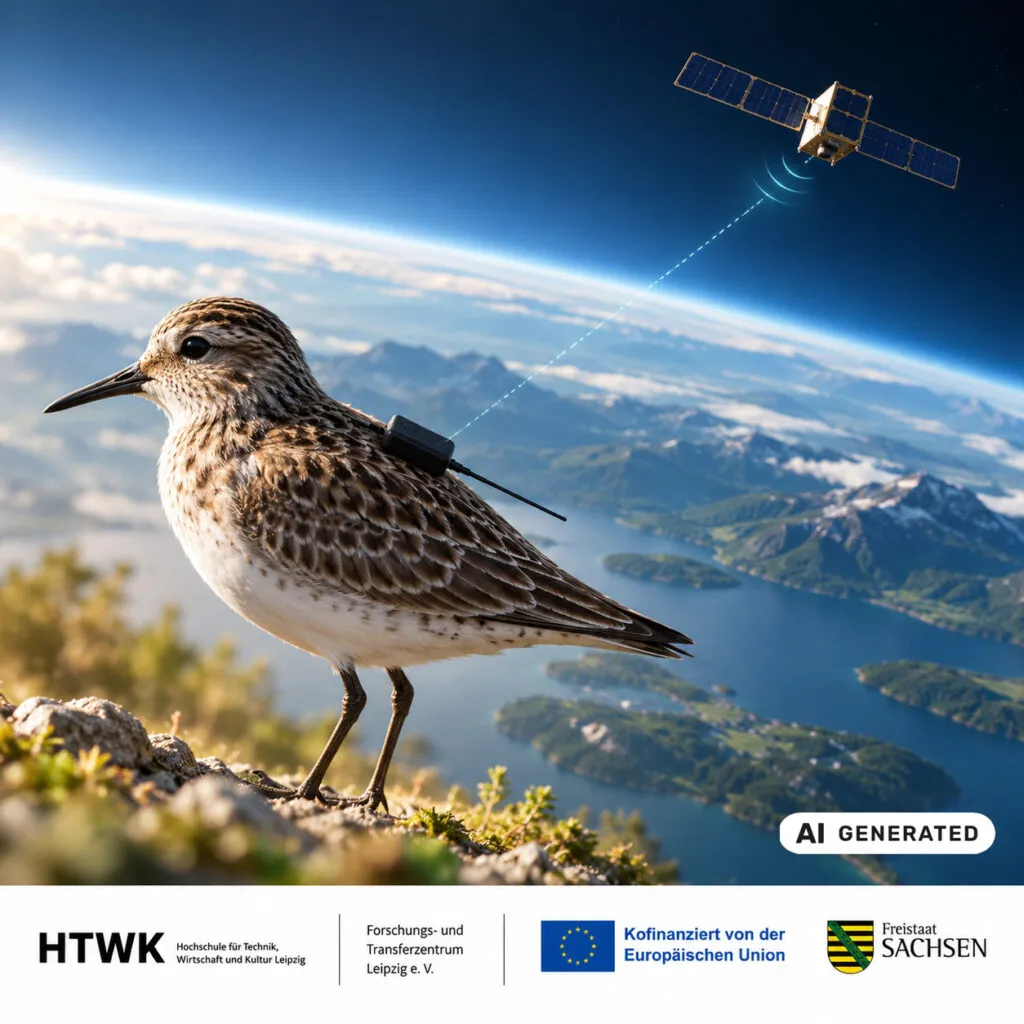
This is particularly important for applications where size, weight and power consumption are critical. Removing the need for GNSS hardware can significantly reduce both energy consumption and system complexity on the device side. The technology therefore creates new possibilities for highly miniaturized tracking devices used in wildlife research, environmental monitoring and other satellite IoT applications.
The results of HERMES1 will now feed directly into TALOS‘ next generation of ultra-light satellite transmitters, targeting a total weight of around one gram. The combination of extremely lightweight hardware, direct-to-satellite communication and satellite-based positioning is an important step towards tracking even smaller animals and objects globally.
HERMES1 also expands the TALOS satellite IoT architecture beyond communication alone: future devices can transmit data while their position is determined through the satellite infrastructure, shifting additional complexity away from the end device and into the space and ground segment.
HERMES1 was co-funded by the European Union and the Free State of Saxony.